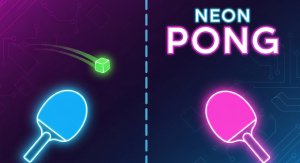
Neon Pong Reflex

Pong Arcade Reflex Casual Brain Pixel Neon
Neon Pong Reflex
167
Developer: Admiral Core Creations
Published: 1713283200
Updated: 2026-09-30

Reviews

Neon Pong Reflex sticks closely to the classic paddle-and-ball formula, adding neon visuals, three selectable difficulty levels, and power-ups that introduce a small strategic layer. Controls are simple on both desktop and mobile, and matches end at seven points, keeping sessions short. The main limitation is that the core loop is familiar, so players seeking deep progression may find it light. It suits casual players and families looking for quick, accessible competition.

Description

Paddle-and-Ball Basics

Neon Pong Reflex follows the classic paddle-and-ball formula: you control a paddle along one side of the play area and try to send the ball past an AI opponent. A point is scored when the opponent misses; the AI scores when you miss. The first side to reach seven points wins the match, so every rally carries weight and a single lapse can swing the score.

Controls Across Devices

On a computer, you move the paddle with the mouse. On a mobile device, you swipe or touch the screen. The control scheme is intentionally minimal, which keeps the focus on timing and positioning rather than complex inputs. Because the same core action works on both platforms, switching between desktop and mobile does not require relearning the game.

Difficulty and Power-Ups

Before a match you choose Easy, Medium, or Hard. Easy suits newcomers, Medium provides a balanced challenge, and Hard is aimed at experienced players. Power-ups appear during play and can give you an edge, adding a layer of decision-making beyond pure reflexes. Knowing when to chase a power-up and when to hold your position is part of the strategy.

Visual Style and Session Length

The neon presentation gives the court a bright, readable look that keeps the ball and paddle easy to track. Matches are short by design, which makes the game suitable for quick breaks as well as longer sessions. The pixel-influenced aesthetic and simple mechanics keep the experience approachable without removing the challenge at higher difficulty levels.


Editorial Notes

Compatibility

This H5 game runs smoothly on:
• Desktop computers (Windows / Mac) • Mobile phones (iPhone / Android)
• Tablets (iPad / Android)
🌐 Best experienced with Chrome, Safari, or Edge

Faq

How many points do I need to win a match in Neon Pong Reflex?
A match ends when one side reaches seven points. You score when the AI opponent misses the ball, and the AI scores when you miss. Because the target is seven, comebacks are possible, but you need to limit consecutive mistakes to stay in control.
Can I play Neon Pong Reflex on both computer and mobile?
Yes. The game supports mouse control on a computer and swipe or touch input on a mobile device. The paddle moves left and right in both cases, so the core handling stays consistent even though the input method changes.
What do the three difficulty levels change in Neon Pong Reflex?
Easy is intended for beginners, Medium offers a balanced challenge, and Hard targets experts. The difficulty setting affects how demanding the AI opponent is, so choosing a level that matches your current comfort with paddle timing will give you a better experience.
Do power-ups appear in every match of Neon Pong Reflex?
Power-ups are part of the gameplay and can appear during matches, giving players a chance to gain an advantage. The game does not specify a fixed schedule for when they show up, so you should stay alert for them while tracking the ball.
Is Neon Pong Reflex suitable for children or family play?
The game is described as family-friendly and designed for players of all ages. It focuses on reflexes and hand-eye coordination rather than mature content. The simple objective and short matches make it easy for younger players to understand, though Hard mode may still be challenging.
What is the best way to improve my reflexes in Neon Pong Reflex?
Regular practice helps you learn the ball's speed and trajectory so you can anticipate its path. Watching the AI opponent's paddle position can also help you predict where the ball will go. Trying different difficulty levels gradually builds consistency without overwhelming you.