Lightbulb Path Puzzle
Reviews
Lightbulb Path Puzzle keeps its scope tight: remove blocks, guide a lightbulb to power, repeat across 60 levels. The physics engine gives each removal weight, so the challenge comes from reading structure rather than reacting quickly. Family-friendly controls and mobile/desktop support widen its audience. The main limitation is that the concept stays consistent throughout, so players seeking new mechanics mid-game may find the later levels more of the same, just harder.
Description
Why Block Order Matters
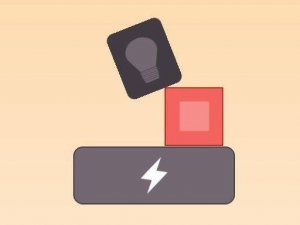
Every level in Lightbulb Path Puzzle is a small structural problem. The lightbulb sits somewhere on the board, the power block sits elsewhere, and a stack of blocks stands between them. You tap or click individual blocks to remove them. The catch is that blocks can support one another, so pulling the wrong piece first can leave the remaining arrangement in a state where the bulb cannot reach its target. The game asks you to read the layout before you act, not after.
Physics That Shape Your Decisions
Removal is not a simple disappearing act. The physics engine makes blocks respond realistically when they lose their neighbors, which means a block that looks easy to clear might shift or settle in a way that changes the route. That behavior is the main reason two players can look at the same level and disagree about the best first move. It also means trial and error is part of the design rather than a failure state.
Sixty Levels, One Clear Goal
The game ships with 60 levels. Early boards are compact and forgiving; later ones add more blocks, tighter spacing, and fewer obvious starting points. Difficulty rises gradually, so the skills you build in the first ten levels — spotting load-bearing blocks, planning two or three removals ahead — carry into the final stretch. When the bulb finally connects to power, a firework animation plays as the reward.
Playing on Phone or Desktop
Controls are limited to tapping or clicking, which keeps the game accessible on both mobile and desktop. There is no timer pressure described, so sessions can be as short as a single puzzle or as long as a full run. The family-friendly presentation and logic-first design make it a reasonable fit for younger players, casual commuters, and anyone who prefers problem solving over reflex tests.








Editorial Notes