Cube Tunnel 3D Arcade Runner
Reviews
Cube Tunnel 3D Arcade Runner keeps its scope narrow: steer a falling cube, avoid blocks, survive as speed increases. That simplicity is the main strength, because it makes the game easy to start and hard to master. The retro 80s visuals and 3D tunnel give it a distinct look, while the two-player mode adds a social layer beyond solo high-score chasing. Players who want deep progression or story will not find it here, but anyone seeking a quick reaction test will get exactly that.
Description
Vertical Descent and Lane Switching
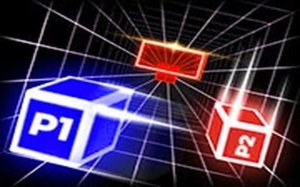
Cube Tunnel 3D Arcade Runner places a cube inside a vertical tunnel and drops it continuously. Your only control is lateral movement: shift the cube left or right to line up with gaps between incoming blocks. Because the cube never stops falling, every input is a commitment. A late tap or an early swerve sends you into a block, ending the run. The tunnel view keeps obstacles visible far enough ahead to plan a path, but the window to act shrinks as speed climbs.
Two Ways to Test Your Reflexes
Single-player mode is a pure survival test. There is no finish line, only the question of how long you can keep reacting cleanly. Two-player mode turns the same tunnel into a head-to-head comparison, where each player's ability to read block patterns and change direction without hesitation decides the winner. Both modes use identical mechanics, so the difference is entirely social: one is a personal best, the other is a direct contest.
Retro Presentation, Modern Depth
The visual style borrows from 80s arcade cabinets while rendering the tunnel in 3D. That combination matters for play, not just looks. The 3D perspective gives block spacing a sense of distance, which helps you judge when to move. Retro-inspired sound cues reinforce the arcade feel and mark the rhythm of the run. Full-screen mode removes surrounding distractions, which is useful when the speed increase starts compressing your reaction time.
Why Runs End and How to Last Longer
Collisions are the only fail state, and they almost always come from reacting to the cube's current position instead of the block ahead. Watching the tunnel rather than the cube gives you more time to choose a lane. Staying calm matters more than twitch speed once the pace accelerates, because panic causes overcorrection. The high score leaderboard tracks your best attempts, giving each run a concrete target and making repeated short sessions feel productive.







Editorial Notes