Fish Growth Challenge

Reviews
Fish Growth Challenge sticks to a classic arcade formula: start small, eat smaller fish, avoid bigger ones. Its strengths are immediate readability and flexible local play for up to three people on one keyboard and mouse. Color customization helps distinguish players, and the option to add more fish lets groups adjust difficulty. The main limitation is that the input describes no progression system, story, or online mode, so it is best suited for short sessions with friends or family rather than long solo play.
Description
Growing Through the Food Chain
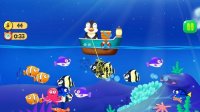
Fish Growth Challenge places every player at the bottom of an underwater food chain. Your fish begins small, and the only way to change that is to eat fish smaller than you. Each meal adds size, which in turn lets you eat fish that were previously a threat. The tension comes from constant risk assessment: chase a safe target and you grow, but misjudge a fish's size and you become someone else's meal. There is no timer or level structure described; the arcade loop is simply growth versus survival.
Controls for One to Three Players
The game supports up to three simultaneous players on one keyboard and mouse setup. Player 1 moves with W, A, S, and D. Player 2 uses the arrow keys. Player 3 uses the mouse to steer and left-clicks to interact. Every player starts small, so early moments are about finding easy prey before larger fish close in. The controls are described as responsive, which matters when you need to reverse direction quickly to escape a bigger opponent.
Customization and Adjustable Challenge
Before or during play, you can change your fish's colors, giving each player a visual identity in the shared water. For groups that want a harder session, additional fish can be added to the game, increasing the number of predators and prey competing for the same space. This option lets families and friends tune the difficulty without changing the core rules.
Reading the Water
Success depends on reading size differences at a glance and predicting where other fish will move. Because up to three humans share the same screen, you are not only avoiding computer-controlled fish but also reacting to other players who may chase the same target or block your escape. The bright graphics keep smaller and larger fish distinguishable, which supports quick decisions. The game is designed to be easy for beginners while still offering enough competition for experienced arcade players.







Editorial Notes