Pocket League 3D: Arcade Car Soccer

Reviews
Pocket League 3D delivers arcade sports action without complex rules. The mix of driving, jumping, and flipping creates a skill ceiling that rewards practice, while the physics engine ensures no two matches feel identical. Local two-player support adds a social option, and the short match length suits quick sessions. The main limitation is the lack of detail about additional modes or online play, but the core loop is solid for players who enjoy accessible, competitive fun.
Description
Car Soccer Basics
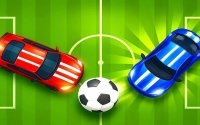
Pocket League 3D takes the structure of soccer and replaces players with small vehicles on a 3D pitch. Your objective is straightforward: drive into a large ball to send it toward the opposing goal and outscore the other team before time runs out. The arena is compact and easy to navigate, which keeps the focus on positioning and quick reactions rather than complex navigation. Country flag selection before each match adds a small personal touch to the setup.
Driving, Jumping, and Flipping
Controls cover steering, acceleration, and jumping. Jumping lets you reach aerial balls, while flips or double jumps can add force or change the ball's direction on contact. Because the ball reacts to a physics engine, its movement is unpredictable; you cannot rely on the same shot twice. That variability means you constantly adjust your approach, reading the ball's path and deciding whether to go for a direct hit or reposition. The simple control scheme makes it easy to start, but timing jumps and flips well takes practice.
Match Modes and Team Play
You can play alone against computer-controlled opponents or compete locally with a friend in two-player mode. In two-player matches, teamwork matters: coordinating attacks and covering defensive zones creates better scoring chances than chasing the ball individually. AI teammates may fill out the teams, though the exact implementation is not detailed. Matches are timed and typically short, which suits quick sessions. The colorful arena and minimal interface keep attention on the field.
Approaching Each Match
Good positioning often beats raw speed. Staying between the ball and your own goal helps block opponent shots, while anticipating the ball's next bounce lets you meet it at a better angle. In two-player mode, talking through who attacks and who hangs back reduces confusion. Because the physics engine makes every bounce slightly different, regular practice improves your ability to judge trajectories and time your jumps. The game rewards adaptation more than memorized plays.





Editorial Notes