10x10 Block Puzzle Challenge
Reviews
10x10 Block Puzzle Challenge delivers a focused puzzle experience: drag shaped blocks onto a ten-by-ten grid, clear full lines, and keep the board open. The absence of timers makes it accessible and relaxing, while the random block sequence prevents memorization and encourages genuine spatial thinking. The main limitation is that it offers no story, progression system, or competitive mode, so players seeking structured goals may find it repetitive. It is best suited to those who value a low-pressure mental workout they can pick up and put down at will.
Description
Fitting Blocks on a Ten-by-Ten Grid
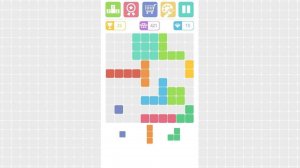
Every move in 10x10 Block Puzzle Challenge starts with three shaped blocks waiting below the board. You drag each one onto the ten-by-ten grid, rotating it when the shape allows. The goal is to fill entire horizontal or vertical lines. When a line is complete, it vanishes and adds to your score. The challenge comes from the fixed board size and the irregular shapes: a poorly placed piece can block several future options, so each drop is a small spatial decision.
No Timers, No Pressure
There is no countdown and no move limit. You can study the board for as long as you like before placing a block. That design choice turns the game into a quiet mental exercise rather than a reflex test. The clean, colorful interface keeps attention on the grid itself, with no distracting menus or pop-ups during play. It suits short breaks and longer sessions equally well because the pace is entirely yours.
Endless Play and Random Blocks
After each placement, a new set of blocks appears, drawn from a random pool. The game continues until no remaining block can fit anywhere on the board. That end condition is the only real failure state, and it usually arrives after a series of cramped placements. Because the block sequence is random, no two sessions play out the same way. You cannot memorize a fixed solution; instead, you learn to read the board and adapt.
Planning for Multi-Line Clears
Clearing one line at a time keeps the board alive, but the higher scores come from setting up two or more lines to disappear with a single block. That requires leaving gaps in strategic places and resisting the urge to fill every empty square immediately. Keeping the center open is one practical habit: blocks placed there tend to restrict future options more than blocks placed along the edges. Over time, regular players develop a feel for which shapes are flexible and which ones need a specific opening.








Editorial Notes