Rolling Sphere Puzzle Run
Reviews
Rolling Sphere Puzzle Run keeps its scope tight: guide a ball to the finish using taps and holds, then deal with gaps, barriers, and moving obstacles. The difficulty curve moves from straight paths to rotating barriers and narrow ledges, and the bright color coding makes hazard reading part of the challenge. Points from speed and collectibles unlock later courses, while the absence of a progress-resetting fail state makes retries low-stress. Best suited to players who enjoy precision timing and short, repeatable puzzle runs.
Description
Core Objective and Controls
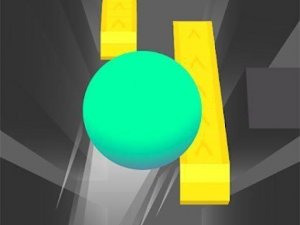
Rolling Sphere Puzzle Run asks one thing of the player: move a ball from the beginning of a course to the finish line. Mouse clicks or touch inputs handle everything. A tap triggers a jump; holding and releasing changes the ball's speed and trajectory. That simple input scheme carries the entire game, and the difficulty comes from how precisely you apply it.
Course Hazards and Timing
Courses are built from gaps, barriers, and moving obstacles. None of these require combat or complex button combinations. They require reading the layout ahead and committing to a path before the ball reaches a hazard. A jump that is slightly early or late can mean a fall or a delay, so the game rewards planning over reaction speed alone.
Level Progression and Visual Cues
Early courses are straight paths with occasional gaps, which teach the basic tap-and-hold controls. Later courses introduce moving platforms, rotating barriers, and narrow ledges. Bright, contrasting colors mark safe paths and danger zones, so the visual design doubles as a navigation tool. Each new course twists a previous mechanic rather than repeating it, which keeps memorization from being enough.
Presentation and Replay Structure
The game uses a clean, cartoon-like look with smooth animations. Backgrounds shift between grassy fields, sandy deserts, and icy caverns, and each setting has its own obstacle designs. The ball leaves a subtle trail of light that gives feedback on movement. Points come from completion speed and collectible items, and those points unlock later courses. There is no fail state that resets progress, so any course can be retried as often as needed.








Editorial Notes