Astral Pilot: Endless Space Run
Reviews
Astral Pilot: Endless Space Run builds its challenge around a single input: hold to slow, release to accelerate. That restraint suits short sessions and family play, and the shifting regions keep the visual experience from growing stale. The gradual difficulty curve gives newcomers room to learn before patterns tighten. The main limitation is inherent to the genre—repetition is the point, and the rare alien encounter is a small reward rather than a structural change.
Description
One-Touch Speed Control
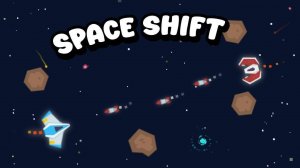
Astral Pilot: Endless Space Run strips the genre to a single interaction: touching and holding the screen slows your starship, while releasing returns it to normal velocity. That one input governs everything. Navigation becomes a timing problem rather than a steering one, because the ship never stops moving forward. Slip through a tight gap and you release; misjudge the hold and you clip the hazard. The control scheme is intuitive enough that new players grasp it in seconds, yet the precision it demands at higher speeds is what separates a short run from a long one.
Regions and Obstacle Identity
The flight passes through a series of distinct space regions, each with its own visual identity and obstacle arrangement. Dense asteroid fields demand constant micro-adjustments, while zones with guided energy projectiles force you to read movement patterns before committing to a speed. Because the environment changes as you progress, the visual experience stays fresh and the gameplay avoids repetition. Backgrounds are designed to be engaging without pulling attention away from the hazards in front of you.
Difficulty Curve and Pattern Reading
Obstacle patterns grow more complex and arrive faster the longer you survive. Early sections space simple rocks far apart; later sequences chain together and require precise speed adjustments. The curve is gradual, giving players time to internalize mechanics before the demands escalate. This structure encourages repeated attempts, since each run is a chance to push a personal best rather than a one-off challenge.
Rare Encounters and Replay Value
Occasionally a rare alien spacecraft appears during a flight. These encounters are not guaranteed, which adds an element of surprise to each attempt. The possibility of seeing something different gives a small incentive to keep playing without altering the core objective. It is a light touch, but it contributes to replay value in a genre where repetition is otherwise the norm.
Approach to Longer Runs
Success depends on learning the typical obstacle layouts of each region. Slowing before narrow passages and speeding up in open areas is the key tactic. Maintaining a calm focus helps avoid panic-induced mistakes, because the control only works when your timing is deliberate. The game rewards patience and gradual improvement rather than aggressive play, making each successful navigation feel earned.







Editorial Notes