Helix Drop Action Arcade
Reviews
Helix Drop Action Arcade strips its design down to a single input: tap left or right to spin the tower. That simplicity makes it approachable, but the endless layouts and gradual speed increase give it staying power for players who enjoy reflex-driven challenges. The absence of timers or scores keeps sessions low-pressure, though the rising pace still punishes careless taps. Bright visuals and smooth animation support the readable, pick-up-and-play loop.
Description
Core Rotation Mechanic
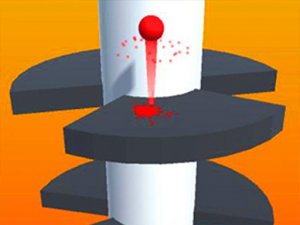
Helix Drop Action Arcade asks one thing of you: tap the left or right side of the screen to spin the helix tower. A ball bounces off the platforms as it falls, and your taps reshape the path ahead. Gaps in each platform are the only safe route down, while colored obstacles end the run on contact. The ball never stops moving on its own, so every tap is a decision about where the next bounce lands.
Endless Layouts and Ramp-Up
No two runs share the same platform arrangement. Each level presents a fresh layout, which keeps the descent unpredictable and replayable. Difficulty climbs as you progress: the tower rotates faster and the ball falls quicker, shrinking the window for each tap. Because the game is endless, there is no final stage to memorize. Instead, you adapt to whatever pattern appears next and react to the speed as it rises.
Session-Friendly Design
There are no timers and no score to manage. That absence of pressure makes Helix Drop Action Arcade easy to pick up for a few minutes or stretch into a longer session. Bright, colorful visuals and smooth animations keep the screen readable even as the pace accelerates. The one-tap control scheme means anyone can start immediately, while the increasing speed gives arcade players a reason to keep refining their timing.
Timing Over Panic
Success depends on watching the ball's trajectory and anticipating where the next gap will rotate into view. Tapping early or late sends the ball into a platform edge or an obstacle. Staying calm matters more than raw speed: panic taps tend to compound mistakes. Focusing on the immediate path rather than the whole tower helps you process the next bounce instead of the entire descent.








Editorial Notes