Color Tile Match Puzzle
Reviews
Color Tile Match Puzzle keeps its rules minimal: match three or more same-colored nuts to clear tiles before the timer runs out. The challenge comes from reading the board fast and spotting matches that trigger chain reactions. More colors and denser layouts raise the difficulty without adding new mechanics. It suits players who enjoy short, focused puzzle sessions and do not mind time pressure. The main limitation is that the input does not describe additional modes, so the experience appears centered on the core timed matching loop.
Description
Matching Colored Nuts Under Time Pressure
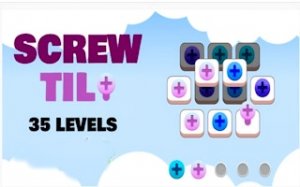
Every tile on the board displays a colored nut. Your task is to spot groups of three or more nuts sharing the same color, then select them to clear those tiles. A timer runs throughout each level, so the challenge comes from reading the board quickly and committing to matches before time expires. The core loop is simple to understand, but the clock turns each decision into a small risk assessment.
Chain Reactions and Board Awareness
Matches do more than remove tiles. When a group disappears, remaining tiles can shift and create new groupings. That means a well-chosen match can trigger a chain reaction, clearing more of the board than the initial selection. Scanning the full layout before tapping helps you spot these cascades. Players who only look at the most obvious clusters often miss the setups that clear larger sections.
Difficulty That Grows With New Colors
Early levels use a limited palette and straightforward arrangements, which makes the matching rule easy to absorb. As you progress, additional colors enter the mix and the tile layouts become more tangled. More colors mean fewer same-color neighbors, so each match requires sharper observation. The difficulty curve is tied directly to this expanding palette rather than to new rules, keeping the game approachable while still raising the pressure.
Controls and Cross-Platform Play
Selecting tiles is done by tapping on mobile or clicking with a mouse on PC. The interface stays out of the way, and the game gives clear feedback when a match is made, so new players can learn the mechanics without guesswork. The responsive layout adapts to different screen sizes, which makes the same puzzle comfortable to play on a phone, tablet, or desktop. Sessions can be short or long, depending on how many levels you attempt in one sitting.








Editorial Notes